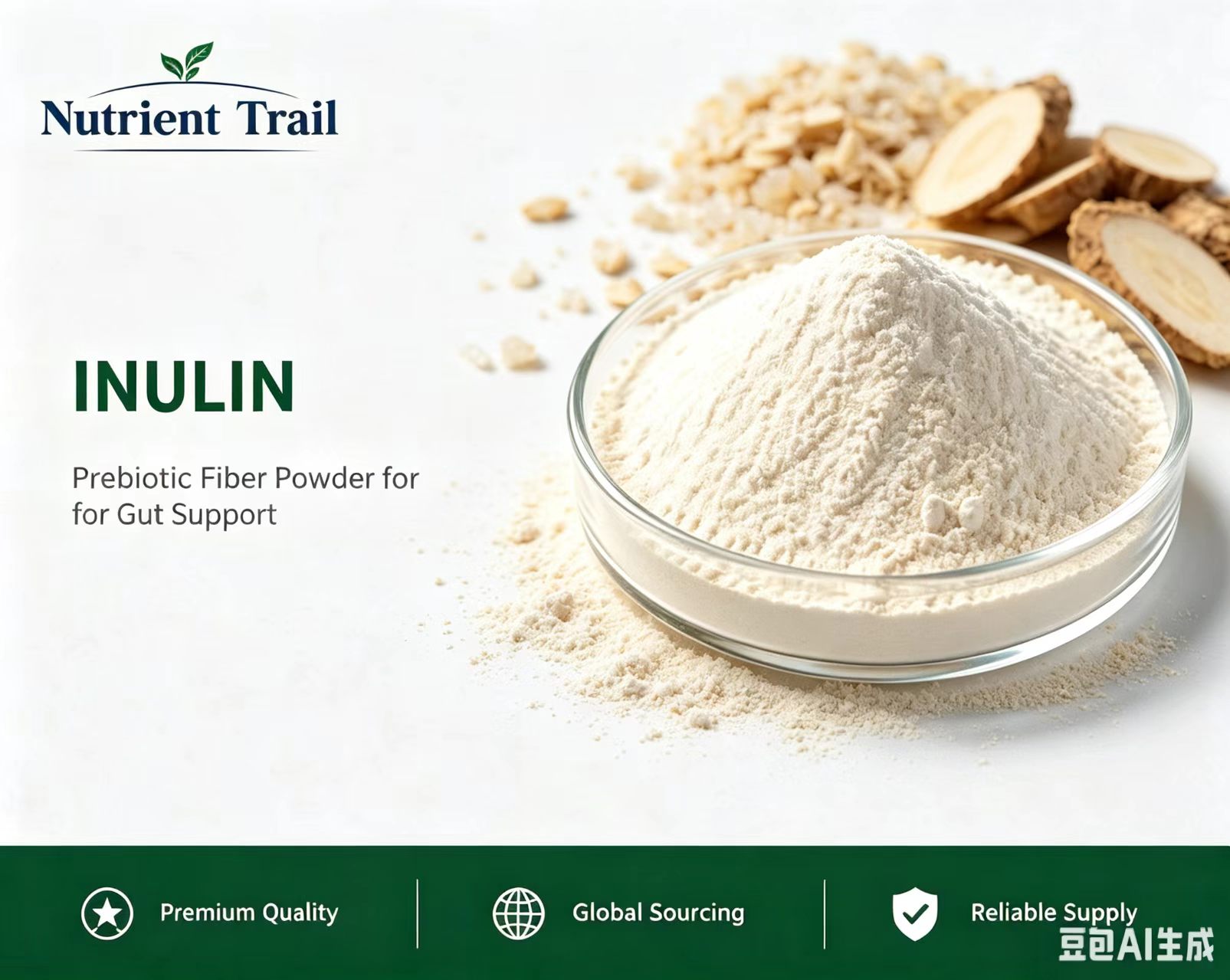
Inulin
The Natural Plant-Derived Prebiotic Fiber Powering Balanced Gut Health and Whole-Body Wellness
Product Specifications
|
Item
|
Specification
|
|
Product Name
|
Inulin
|
|
Abbreviation
|
Fructan Prebiotic Fiber
|
|
CAS Number
|
9005-80-5
|
|
Molecular Formula
|
(C₆H₁₀O₅)n (n typically ranges from 2 to 60)
|
|
Appearance
|
White to Off-White Fine Powder or Granule
|
|
Assay
|
90% / 95% / 98% (Customizable per requirement)
|
|
Test Method
|
HPLC
|
|
Shelf Life
|
24 Months
|
|
Storage Condition
|
Store in a Cool, Dry Place, Sealed Away from Direct Strong Light and Excess Moisture
|
|
Why Is Inulin So Popular?
The growing widespread popularity of Inulin is closely linked to the global boom in gut health science public awareness, alongside decades of verified consumption safety and the unique natural plant prebiotic properties of this ingredient. Inulin is a natural soluble dietary fiber widely extracted from chicory roots, and it cannot be digested and absorbed by the human body's own digestive enzymes, playing an essential role in hundreds of key physiological processes that support long-term wellness:
-
Selective beneficial gut probiotic proliferation
-
Dietary fiber supplementation to support regular bowel movements
-
Low-glycine carbohydrate metabolism regulation
-
Mineral nutrient absorption promotion
-
Long-lasting satiety support for healthy weight management
Research has shown that modern refined food dominant diets widely lack sufficient soluble dietary fiber, leading to common gut flora imbalance and digestive discomfort issues across most population groups. As one of the most well-researched natural prebiotic ingredients, Inulin has become a cornerstone of the modern gut health, low-glycemic and daily digestive wellness formulations.
Key Benefits of Inulin
-
1. Selectively Nourishes Beneficial Gut Probiotics
Inulin acts as the exclusive nutrient source for Bifidobacterium and Lactobacillus strains in the human gut, promoting their massive proliferation while inhibiting the reproduction of harmful pathogenic bacteria, effectively restoring a balanced, healthy gut microbiome environment to support long-term digestive system stability.
-
2. Supplies High-Quality Soluble Dietary Fiber
Inulin delivers rich soluble dietary fiber that adds volume to intestinal contents and promotes regular gentle bowel movements, effectively relieving common digestive issues such as chronic constipation, bloating and irregular gut transit without causing harsh irritation or side effects.
-
3. Supports Low-Glycemic Metabolic Health
Inulin will not cause rapid blood sugar or insulin spikes after consumption, helping maintain stable post-meal blood glucose levels, which makes it a perfect low-glycemic ingredient suitable for diabetic populations and consumers pursuing long-term metabolic wellness.
-
4. Significantly Enhances Mineral Nutrient Absorption
Inulin effectively lowers the local pH value in the intestinal tract, promoting the dissolution and absorption of key minerals including calcium, magnesium and iron, greatly improving the actual utilization efficiency of mineral supplements and supporting long-term bone health.
-
5. Creates Long-Lasting Satiety for Healthy Weight Management
Since Inulin is not digested in the stomach, it extends food residence time in the digestive system, creating a long-lasting feeling of fullness that reduces excess calorie intake, making it a very popular ingredient for healthy weight management and low-calorie meal replacement products.
Applications
Inulin is widely used across multiple fast-growing product categories, including:
-
Gut Health and Prebiotic Supplement Formulations
-
Soluble Dietary Fiber Daily Products
-
Low-Glycemic Meal Replacement and Weight Management Powders
-
Fortified Functional Dairy, Yogurt and Plant Milk Products
-
Mineral Absorption Enhancement and Bone Health Supplements
-
Low Calorie Baked Pastry and Confectionery Products
-
Children and Elderly Gentle Digestive Wellness Products
-
Prebiotic Added Functional Beverages
Common dosage forms include:
-
Fine Powder Blends
-
Granule Stick Packs
-
Capsules
-
Tablets
-
Fortified Dairy Products
-
Meal Replacement Powders
-
Confectionery Additives
-
Functional Beverages
Inulin vs Other Prebiotic and Wellness Ingredients
While the gut wellness and soluble fiber category continues to expand, Inulin remains one of the most recognizable natural plant-derived prebiotic ingredients available today.
|
Ingredient
|
Primary Function
|
|
Inulin
|
Natural Chicory-Derived Prebiotic Soluble Fiber, Supports Probiotic Growth + Satiety
|
|
GOS (Galactooligosaccharides)
|
Breast Milk Origin Prebiotic, Ultra-High Tolerance for Infant Use
|
|
FOS (Fructooligosaccharides)
|
Plant-Derived Prebiotic, Cost-Effective Gut Support
|
|
NMN
|
NAD+ Precursor for Full-Body Cellular Energy and Healthy Aging
|
|
CoQ10
|
Mitochondrial Energy Production and Cellular Antioxidant Protection
|
|
Omega-3 Fish Oil
|
Essential Polyunsaturated Fatty Acid for Cardiovascular Health and Anti-Inflammation
|
|
Many leading wellness brands combine Inulin with complementary ingredients such as probiotic strains, other dietary fibers or mineral nutrients to create comprehensive gut health formulations.
Market Opportunity
The global gut health and functional fiber market continues to experience strong growth as consumers increasingly prioritize long-term digestive wellness and preventive health strategies. Several key trends are fueling the rising demand for Inulin:
-
Growing public awareness of gut microbiome science and soluble dietary fiber benefits
-
The global rise of low-sugar, low-glycemic and meal replacement product consumption
-
Expanding prebiotic supplement categories targeting all population groups
-
Increasing consumer preference for natural plant-derived ingredients
-
Rising demand for science-backed, cost-effective fiber ingredients
As a result, Inulin remains one of the most commercially attractive ingredients for brands developing next-generation gut wellness products.
Frequently Asked Questions
1.What is Inulin?
Inulin is a natural soluble dietary fiber and prebiotic extracted from chicory roots, which cannot be digested by human digestive enzymes, and can selectively nourish beneficial gut probiotics to support balanced digestive health.
2.Is Inulin naturally found in food?
Yes. Small amounts of natural Inulin can be found in chicory roots, garlic, onions, artichokes, bananas and other common plant foods.
3.What is the difference between Inulin and other common prebiotics?
Inulin combines the dual functions of prebiotic nourishment and soluble dietary fiber supplementation, with proper viscosity that is very suitable to be added to meal replacement powders and dairy products, creating smooth texture and long-lasting satiety that other prebiotics cannot match.
4.What formulations can Inulin be used in?
Inulin features excellent water solubility, no unpleasant aftertaste, wide ingredient compatibility and good thermal stability, suitable for powder blends, stick packs, capsules, tablets, meal replacements, dairy products, baked goods and most common supplement and fortified food applications.
5.What purity level is typically available?
Premium food-grade Inulin is commonly produced at purity levels of 90%, 95% or 98% to meet different formulation requirements.
Looking for a Reliable Inulin Supplier?
As demand for gut health and prebiotic products continues to grow, ingredient quality, consistency, and supply reliability have become increasingly important for supplement brands and manufacturers. Nutrient Trail supplies high-purity Inulin designed for dietary supplement, functional food, and beverage applications. Comprehensive technical documentation, including specifications, COA, and quality-related information, is available to support product development and commercialization.