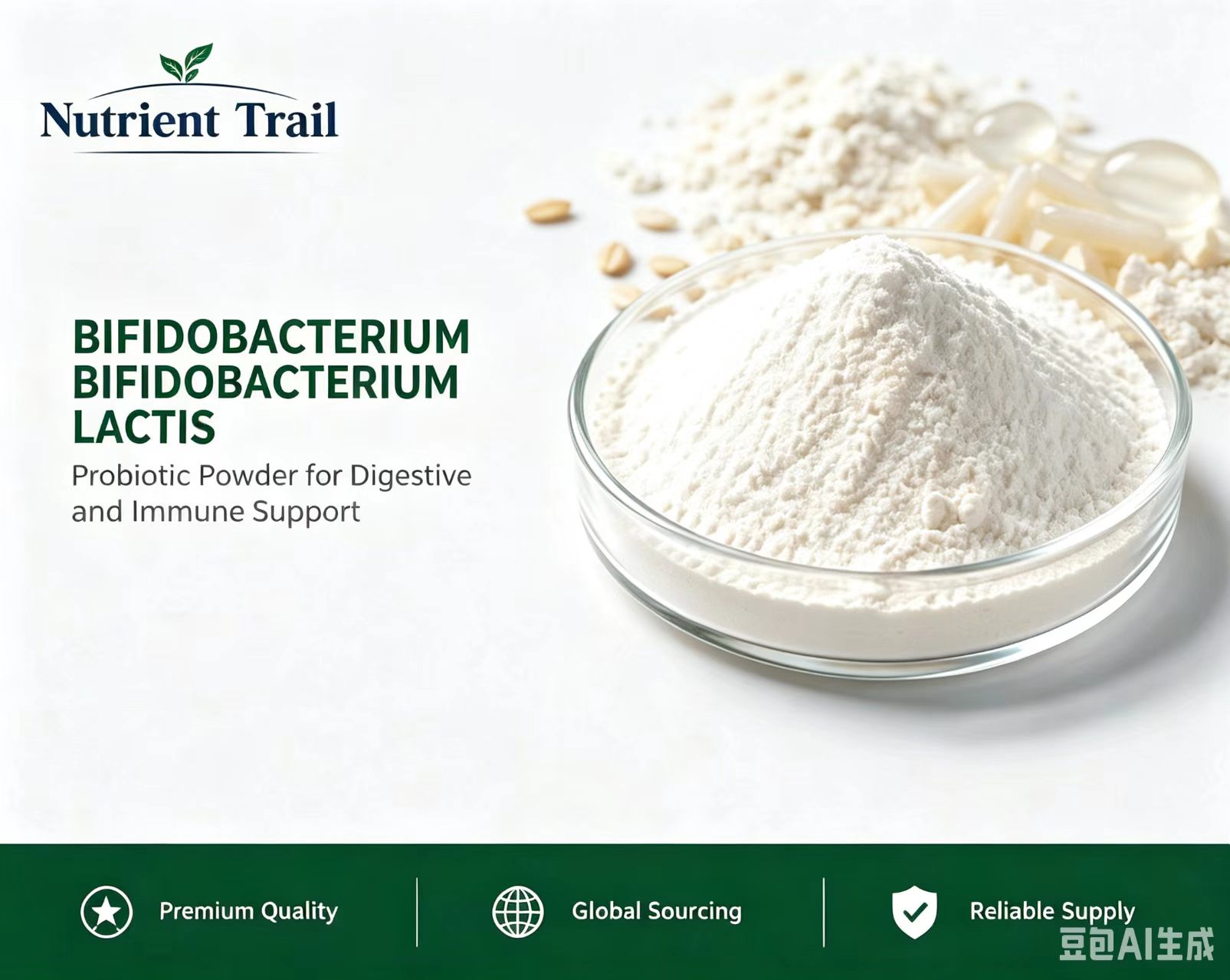
Bifidobacterium lactis
The Well-Documented Gut-Symbiotic Probiotic Powering Microecological Balance and Whole-Body Immune Support
Product Specifications
|
Item
|
Specification
|
|
Product Name
|
Bifidobacterium lactis
|
|
Abbreviation
|
B. lactis
|
|
Strain Registration No.
|
Standard commercial strains ATCC 27536 / CGMCC 1.2217
|
|
Cell Morphology
|
Gram-positive anaerobic rod-shaped beneficial probiotic species
|
|
Appearance
|
Off-White to Light Creamy Yellow Uniform Free-Flowing Powder
|
|
Assay
|
Viable Cell Count ≥1.0×10¹¹ CFU/g (customizable CFU levels from 10⁹ to 3×10¹¹ CFU/g available)
|
|
Test Method
|
Anaerobic Plate Count / 16S rRNA Gene Sequencing Identification
|
|
Shelf Life
|
24 Months
|
|
Storage Condition
|
Store in a Cool, Dry Place, Avoid Direct Sunlight and High Humidity
|
|
Why Is Bifidobacterium lactis So Popular?
The growing global popularity of Bifidobacterium lactis is closely linked to the deepening public scientific understanding of the critical role Bifidobacterium species play as the dominant anaerobic beneficial flora in the human large intestine. Bifidobacterium is one of the earliest beneficial bacteria colonizing the infant gut, and it accounts for more than 90% of the total intestinal microbiota in healthy breastfed newborns, playing an irreplaceable role in supporting:
-
Large intestine microecological balance maintenance
-
Intestinal mucosal barrier integrity
-
Immune system development and regulation
-
Undigested dietary fiber fermentation
-
Regular healthy bowel movement rhythm
Research has shown that the population of native Bifidobacterium in the human gut naturally gradually declines with age, and the abundance of Bifidobacterium in the gut of elderly people is often less than 1% of that of infants. This widespread age-related flora decline has created huge market demand for supplementing exogenous high-activity Bifidobacterium lactis, making it a core staple ingredient of modern gut health, children's nutrition and daily immune support formulations.
Key Benefits of Bifidobacterium lactis
-
Dominates Large Intestine Microecological Regulation
Bifidobacterium lactis specifically colonizes and multiplies in the human large intestine, the main habitat that most common small-intestine probiotic strains cannot effectively reach. It produces natural acetic acid and lactic acid during metabolism to lower the local pH of the large intestine, effectively inhibiting the overgrowth of harmful putrefactive bacteria, reducing the production of toxic metabolic by-products, and restoring a healthy symbiotic flora structure.
-
Strengthens Intestinal Mucosal Barrier Function
Bifidobacterium lactis can adhere to the surface of intestinal epithelial cells to form a protective biological membrane, preventing harmful pathogens and endotoxins from invading the bloodstream through the intestinal wall, effectively maintaining the integrity of the intestinal barrier and reducing the risk of metabolic endotoxemia.
-
Modulates Whole-Body Immune Response
As a classic immune-regulating probiotic strain, Bifidobacterium lactis effectively stimulates the maturation of gut-associated lymphoid tissue (GALT), increases the secretion of secretory immunoglobulin A (sIgA) on the intestinal mucosa, improves the body's ability to resist external pathogen invasion, and reduces the frequency of common respiratory and digestive tract discomforts.
-
Improves Bowel Regularity and Relieves Mild Constipation
The short-chain fatty acids produced by Bifidobacterium lactis during fermentation can stimulate the mild peristalsis of the large intestine, increase the water retention of intestinal contents, help form soft and easy-to-pass stools, and provide long-term gentle relief for occasional mild constipation and irregular bowel movement without irritation or dependency.
-
Supports Nutrient Absorption and Metabolic Balance
Bifidobacterium lactis participates in the fermentation of undigested dietary fiber in the gut to produce beneficial short-chain fatty acids including butyrate and propionate, which provide nourishment energy for colon epithelial cells, while also promoting the absorption efficiency of key nutrients such as calcium, magnesium and B vitamins.
Applications
Bifidobacterium lactis is widely used across multiple product categories, including:
-
Large Intestine Balance Probiotic Supplements
-
Children's and Family Daily Gut Nutrition Products
-
Immune Support Daily Wellness Formulations
-
Fermented Dairy and Probiotic Yogurt Drinks
-
Senior Intestinal Health Nutritional Products
-
Post-Antibiotic Flora Recovery Supplements
Common dosage forms include:
-
Freeze-Dried Probiotic Powder Blends
-
Vegetarian Enteric-Coated Capsules
-
Probiotic Chewable Tablets
-
Portable Single-Serve Stick Packs
-
Children's Probiotic Gummies
-
Fortifying Additive in Milk Powder and Nutritional Cereals
Bifidobacterium lactis vs Other Common Probiotic Ingredients
While the global probiotic and gut wellness category continues to expand, Bifidobacterium lactis remains one of the most well-researched, clinically validated and universally recognized dominant large-intestine probiotic ingredients available today.
|
Ingredient
|
Primary Function
|
|
Bifidobacterium lactis
|
Dominant Bifidobacterium strain for large intestine balance and immune support
|
|
Lactobacillus acidophilus
|
Common lactic acid probiotic for small intestine health
|
|
Bacillus coagulans
|
Spore-forming lactic acid probiotic for high stability and digestive relief
|
|
Lactobacillus rhamnosus GG
|
Well-documented strain for gut barrier and anti-allergy support
|
|
FOS Prebiotic
|
Soluble dietary fiber that acts as selective food for Bifidobacterium growth
|
|
Inulin Prebiotic
|
Long-chain prebiotic that promotes the proliferation of native Bifidobacterium in the gut
|
|
Many health brands combine Bifidobacterium lactis with complementary strains, prebiotic fibers and immune nutrients to create comprehensive multi-strain gut symbiotic formulations for family-wide daily use.
Market Opportunity
The global probiotic and gut immune wellness market continues to experience strong growth as consumers increasingly prioritize family-wide daily intestinal health care, children's immune support and gentle age-related gut flora maintenance. Several trends are fueling the rising demand for high-quality Bifidobacterium lactis:
-
Growing public awareness of the critical role of Bifidobacterium in gut health
-
Rapid expansion of family and children's targeted probiotic product lines
-
Rising demand for mild, long-term daily gut regulation solutions for elderly populations
-
Increasing emphasis on post-antibiotic gut flora recovery across all age groups
-
Widespread adoption of Bifidobacterium as a standard fortifying ingredient in fermented dairy products
As a result, Bifidobacterium lactis remains one of the most commercially attractive foundational ingredients for brands developing next-generation family wellness and gut immune support products.
Frequently Asked Questions
2.Is Bifidobacterium lactis safe for long-term consumption by all age groups?
Yes. Bifidobacterium lactis has obtained GRAS (Generally Recognized As Safe) status from the US FDA, and is approved as an allowed food-grade probiotic for infants, children, adults and elderly groups by global regulatory authorities including EFSA, with decades of verified safe consumption records.
3.What viability levels are typically available?
Premium freeze-dried food-grade Bifidobacterium lactis is commonly produced at viable counts of 100 Billion CFU/g (1.0×10¹¹ CFU/g) or higher, with non-GMO, halal, kosher, organic and infant-food-grade certified options available to meet different market regulatory requirements.
4.What formulations can Bifidobacterium lactis be used in?
Bifidobacterium lactis is suitable for enteric-coated capsules, tablets, powder blends, stick packs, gummies, and fermented dairy applications. High-strain varieties are also compatible with mild low-temperature processing conditions for functional food production.
5.What are the storage requirements for Bifidobacterium lactis?
Standard stabilized Bifidobacterium lactis maintains over 70% of its labeled viable count at room temperature for the full 24-month shelf life, while cold chain storage at 2-8°C can further extend the retention of viable cells to guarantee higher activity for the entire product lifecycle.
Looking for a Reliable Bifidobacterium lactis Supplier?
As demand for gut health and family probiotic products continues to grow, strain purity, viable count accuracy, activity stability and supply reliability have become increasingly important for supplement brands and food manufacturers. Nutrient Trail supplies high-purity, third-party tested Bifidobacterium lactis designed for dietary supplement, functional food, and dairy applications. Comprehensive technical documentation, including specifications, COA, strain identification reports, microbial safety test records and all required quality-related information, is available to fully support product development and commercialization.