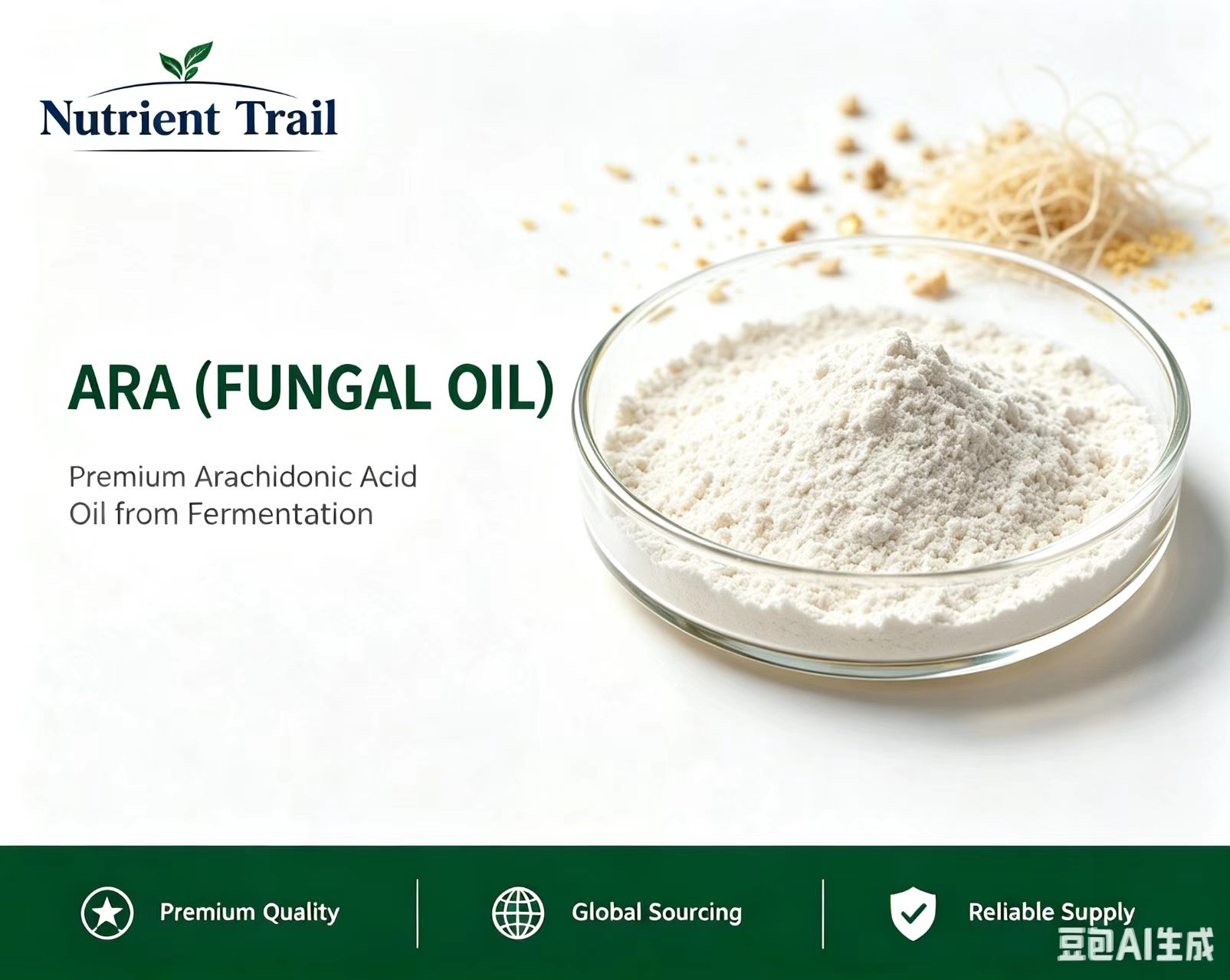
ARA (Fungal Oil)
The Essential Omega-6 Fatty Acid Powering Holistic Growth & Wellnes
Product Specifications
|
Item
|
Specification
|
|
Product Name
|
ARA (Arachidonic Acid) Fungal Oil
|
|
Abbreviation
|
ARA
|
|
CAS Number
|
506-32-1
|
|
Molecular Formula
|
C₂₀H₃₂O₂
|
|
Molecular Weight
|
304.47
|
|
Appearance
|
Pale Yellow Translucent Oily Liquid
|
|
Assay
|
≥40% (Total Arachidonic Acid Content)
|
|
Test Method
|
GC (Gas Chromatography)
|
|
Shelf Life
|
24 Months
|
|
Storage Condition
|
Store in a Cool, Dry, Dark Place, Sealed Away From Air and Light
|
|
Why Is ARA (Fungal Oil) So Popular?
The growing popularity of ARA (Fungal Oil) is closely linked to increasing scientific interest in arachidonic acid, a polyunsaturated fatty acid involved in hundreds of critical biological processes throughout the body. ARA plays an essential role in:
-
Infant brain and retinal nerve development
-
Immune system regulation and inflammatory response modulation
-
Cellular membrane structure maintenance and fluidity adjustment
-
Neurotransmitter synthesis and cognitive function support
-
Skeletal muscle growth and post-exercise recovery
Research has shown that the human body can only synthesize ARA in limited amounts under specific conditions, and infants in particular cannot produce enough ARA on their own to support rapid growth. As a result, manufacturers have explored various strategies to obtain high-purity, safe ARA, leading to widespread interest in fungal fermentation-derived ARA as a stable, non-allergen, sustainable source. This connection between ARA and core growth support has made the ingredient a cornerstone of modern formulations focused on early life nutrition, adult cognitive wellness, and sports nutrition.
Key Benefits of ARA (Fungal Oil)
-
Supports Infant Neuro & Visual Development
ARA is a core component of brain gray matter and retinal photoreceptor cells, accounting for nearly 20% of the total fatty acids in the human brain. Supplementing with adequate ARA helps support normal neural network formation and visual acuity development in infants and young children.
-
Promotes Cellular Membrane Health
As a key structural component of cell membranes, ARA helps maintain the fluidity and permeability of cell membranes, ensuring normal material transport, signal transduction and metabolic activities between cells.
-
Supports Immune System Function
ARA serves as an important precursor for the synthesis of immune-related bioactive substances in the body, helping to regulate normal immune response and maintain balanced immune health.
-
Helps Maintain Cognitive Wellness in Adults
Long-term maintenance of sufficient ARA levels helps support normal neuronal activity, delay age-related cognitive decline, and sustain stable mental clarity and learning efficiency.
-
Supports Sports Nutrition & Post-Workout Recovery
ARA participates in the regulation of skeletal muscle repair and growth processes after high-intensity exercise, helping to reduce post-exercise soreness and support the maintenance of lean muscle mass for fitness enthusiasts and active adults.
Applications
ARA (Fungal Oil) is widely used across multiple product categories, including:
-
Infant Formula & Follow-Up Formula
-
Pregnant & Lactating Women Nutrition Supplements
-
Children's Brain Health Products
-
Adult Cognitive Wellness Formulations
-
Sports Nutrition & Post-Workout Recovery Products
-
Premium Daily Nutritional Wellness Formulas
Common dosage forms include:
-
Softgels
-
Microencapsulated Powder
-
Suspension Emulsions
-
Nutritional Fortification Premixes
-
Functional Dairy Products
-
Puffed Nutritional Foods
ARA (Fungal Oil) vs Other Common Wellness Lipid Ingredients
While the nutritional lipid category continues to expand, ARA (Fungal Oil) remains one of the most recognizable and evidence-backed ingredients available today:
|
Ingredient
|
Primary Function
|
|
ARA (Fungal Oil)
|
Structural Support for Neurodevelopment & Cellular Membranes
|
|
DHA Algal Oil
|
Omega-3 Fatty Acid for Retinal & Brain Health
|
|
EPA Fish Oil
|
Omega-3 Fatty Acid for Cardiovascular Wellness
|
|
ALA (Flaxseed Oil)
|
Plant-Based Essential Omega-3 Precursor
|
|
LA (Sunflower Seed Oil)
|
Basic Omega-6 Fatty Acid Nutritional Supplement
|
|
Gamma-Linolenic Acid (Evening Primrose Oil)
|
Skin Health & Endocrine Regulation Support
|
|
Many brands combine ARA with complementary ingredients such as DHA, taurine and choline to create comprehensive early life nutrition and healthy cognitive aging formulations.
Market Opportunity
The global nutritional fortification and maternal-infant nutrition market continues to experience strong growth as consumers increasingly prioritize evidence-based, safe, traceable nutritional ingredients. Several trends are fueling demand for ARA (Fungal Oil):
-
Growing awareness of early life development science
-
Rising investment in high-quality maternal and child nutrition products globally
-
Expansion of premium sports and cognitive nutrition categories
-
Increased interest in sustainable, non-animal derived functional ingredients
-
Rising demand for fermentation-produced ingredients free of common allergens
As a result, ARA (Fungal Oil) remains one of the most commercially attractive ingredients for brands developing next-generation wellness products covering all age groups.
Frequently Asked Questions
1.What is ARA (Fungal Oil)?
ARA (Fungal Oil) is a high-purity arachidonic acid product produced through controlled microbial fermentation of Mortierella alpina, which is a natural, highly bioavailable source of the essential omega-6 polyunsaturated fatty acid ARA that supports multiple core physiological functions in the human body.
2.Is ARA naturally found in food?
Yes. Small amounts of ARA can be found in animal-sourced foods such as meat, eggs and dairy products, but it is difficult for people with special nutritional needs such as infants to obtain sufficient intake from daily diet alone. The fungal fermentation-derived ARA has higher purity, more stable quality and no risk of marine source pollution compared with animal-derived ARA.
3.What is the difference between ARA and DHA?
ARA is an omega-6 polyunsaturated fatty acid, which mainly supports the structural integrity of brain cell membranes and immune regulation, while DHA is an omega-3 polyunsaturated fatty acid, which focuses on supporting retinal development and cardiovascular health. The two are often used in combination in maternal and child nutrition products to produce a synergistic effect.
4.What formulations can ARA (Fungal Oil) be used in?
ARA (Fungal Oil) is suitable for infant formula, nutritional softgels, microencapsulated powder premixes, functional dairy products, and a variety of other nutritional fortification applications.
5.What purity level is typically available?
Premium ARA Fungal Oil produced through modern fermentation technology is commonly available at arachidonic acid purity levels of 40% or higher, and custom specifications up to 99% concentrated ARA products can be provided for special formulation needs.
Looking for a Reliable ARA (Fungal Oil) Supplier?
As demand for maternal-infant nutrition, cognitive wellness and sports nutrition products continues to grow, ingredient quality, consistency, and supply reliability have become increasingly important for supplement brands and manufacturers. Nutrient Trail supplies high-purity, fermentation-derived ARA (Fungal Oil) designed for dietary supplement, infant nutrition, functional food, and beverage applications. Comprehensive technical documentation, including specifications, COA, and quality-related information, is available to support product development and commercialization. Whether you are launching a new early life nutrition product, expanding a cognitive wellness portfolio, or exploring emerging opportunities in the sports nutrition category, our team is ready to help you find the right ingredient solution for your next innovation.