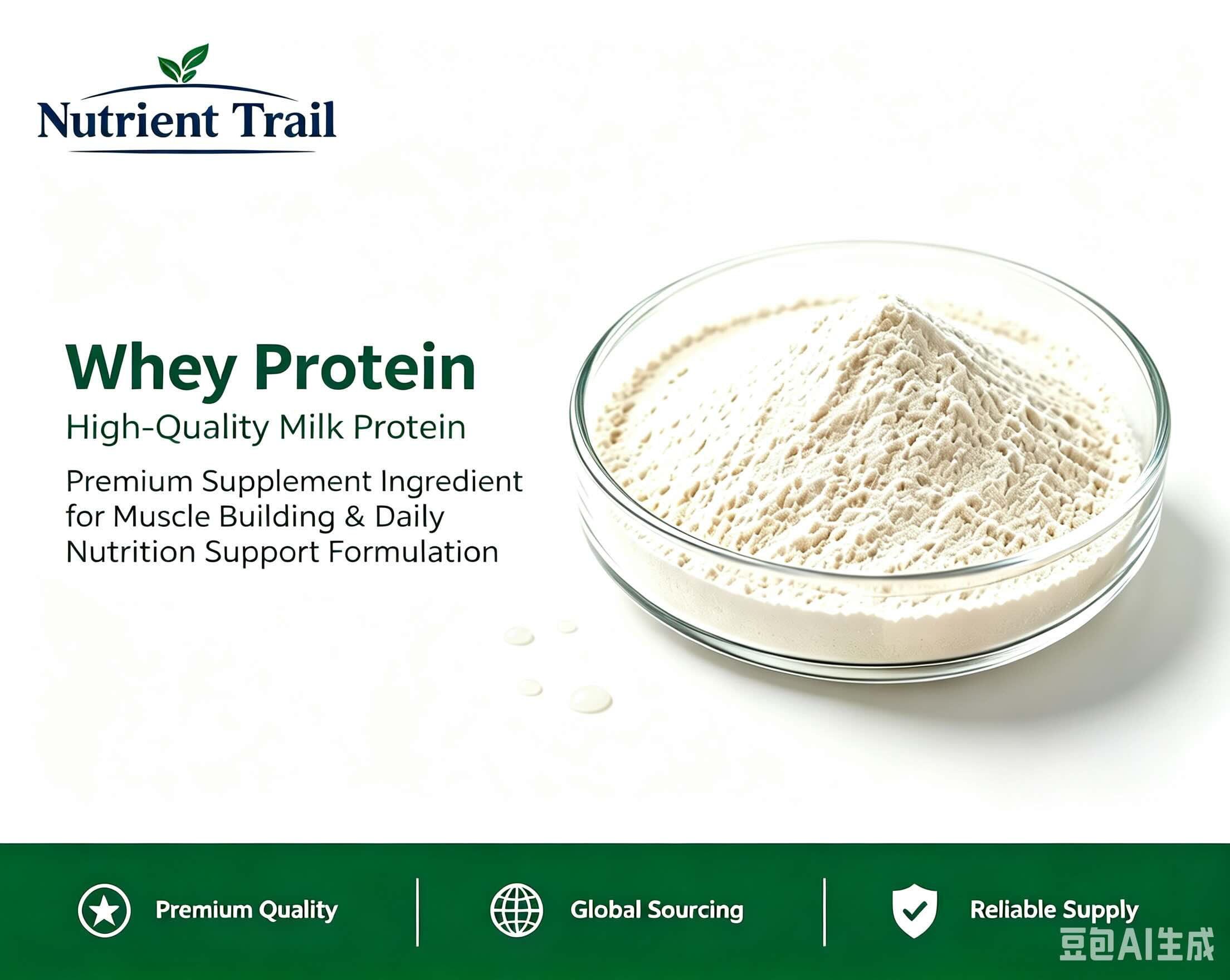
Whey Protein Concentrate
The Complete High-Quality Protein Powering Muscle Growth, Recovery & Daily Nutritional Balance
Product Specifications
|
Item
|
Specification
|
|
Product Name
|
Whey Protein Concentrate
|
|
Abbreviation
|
WPC
|
|
CAS Number
|
84082-54-2
|
|
Molecular Formula
|
Complex Mixture of Protein Fractions, Lactose, Fat and Minerals
|
|
Molecular Weight
|
Multi-Component (Average Protein Molecular Weight ~10,000 ~ 60,000 Da)
|
|
Appearance
|
Uniform Milky White to Light Cream Free-Flowing Powder
|
|
Protein Content
|
35% / 70% / 80% (Customizable for Different Application Scenarios)
|
|
Test Method
|
Kjeldahl Method
|
|
Shelf Life
|
24 Months
|
|
Storage Condition
|
Store in a Cool, Dry, Well-Ventilated Place, Sealed to Prevent Moisture and Oxidation
|
|
Why Is Whey Protein Concentrate So Popular?
The global popularity of Whey Protein Concentrate is deeply tied to its unique status as a complete, easily digestible high-quality protein sourced from cow's milk, covering almost all core nutritional demands across fitness, daily balanced nutrition, clinical recovery and special population support. Whey protein, as the liquid by-product separated during cheese production, retains nearly all the natural bioactive components in raw milk, and supports hundreds of critical physiological processes:
-
Skeletal muscle synthesis and post-exercise tissue repair
-
Immune system activity regulation and immune factor production
-
Sustained amino acid supply to maintain steady bodily functions
-
Appetite regulation and healthy body composition management
-
Bone tissue maintenance and muscle loss prevention for elderly groups
Research confirms that the human body cannot synthesize all 9 essential amino acids on its own, and the amino acid composition of whey protein completely matches the ideal nutritional ratio required by the human body, with an extremely high digestion and absorption efficiency far exceeding most plant protein sources. After decades of market popularization and technological iteration, Whey Protein Concentrate has become the most cost-effective, widely accepted core raw material in the global protein supplement market, and the cornerstone of all categories of sports nutrition and mass nutritional fortification products.
Key Benefits of Whey Protein Concentrate
-
Rapidly Supports Muscle Synthesis & Post-Workout Recovery
Whey Protein Concentrate is rich in branched-chain amino acids (BCAAs), especially leucine, the key signaling molecule that triggers muscle protein synthesis. Consuming Whey Protein Concentrate after high-intensity exercise can quickly replenish amino acids to damaged muscle fibers, accelerate repair, reduce delayed onset muscle soreness, and support continuous muscle growth for fitness enthusiasts, athletes and active adults.
-
Provides Complete Essential Amino Acid Nutrition
As a full-value high-quality protein, Whey Protein Concentrate contains all 9 essential amino acids that the human body cannot synthesize by itself, with a balanced ratio far higher than the WHO recommended ideal standard, effectively filling the protein nutrition gap caused by unbalanced daily diets for all age groups.
-
Supports Healthy Immune Function
Retained natural bioactive components in non-denatured Whey Protein Concentrate, including lactoferrin, β-lactoglobulin and immunoglobulins, help regulate the activity of immune cells, support the body's defense against external harmful factors, and maintain long-term steady immune health.
-
Helps Maintain Healthy Body Composition
Adequate high-quality protein intake can effectively increase satiety, reduce excessive calorie intake from high-carbohydrate food, support the retention of lean muscle mass during weight management, and help users achieve a healthy body fat ratio without losing muscle.
-
Prevents Sarcopenia in Elderly Populations
For middle-aged and elderly people whose muscle synthesis efficiency naturally declines with age, supplementing Whey Protein Concentrate with regular resistance training can effectively slow down age-related muscle loss, maintain muscle strength and mobility, and reduce the risk of falls and physical function decline.
Applications
Whey Protein Concentrate is widely adopted across massive product categories, including:
-
Sports Nutrition & Muscle Growth Supplements
-
Daily Balanced Protein Powder for General Populations
-
Meal Replacement & Weight Management Products
-
Elderly Nutrition & Sarcopenia Prevention Formulations
-
Clinical Post-Operative Recovery Nutritional Products
-
Children & Adolescents Growth Support Drinks
-
Fortified Dairy Products & Protein-Added Baked Foods
-
Ready-to-Drink Protein Beverages & Energy Bars
Common commercial dosage forms include:
-
Instant Flavored Protein Powder
-
Tablets & Chewables
-
Protein Bars & Solid Nutritional Snacks
-
Pre-Mixed Nutritional Drinks
-
Fortified Cereals & Puffed Foods
-
Frozen Fermented Dairy Products
Whey Protein Concentrate vs Other Common Protein Ingredients
As the global protein supplement market keeps expanding, Whey Protein Concentrate remains the most cost-effective, market-proven high-quality protein raw material with the highest user acceptance:
|
Ingredient
|
Primary Function
|
|
Whey Protein Concentrate
|
Balanced High-Quality Protein for Daily Nutrition & Muscle Support
|
|
Whey Protein Isolate
|
Low-Lactose High-Purity Whey Protein for Sensitive Groups
|
|
Casein Protein
|
Slow-Release Sustained Amino Acid Supply for Overnight Recovery
|
|
Soy Protein Isolate
|
Plant-Based Complete Protein for Vegan Formulations
|
|
Pea Protein
|
Hypoallergenic Plant Protein for Clean Label Products
|
|
Collagen Peptide
|
Skin & Joint Targeted Protein Nutrition
|
|
Leading nutrition brands often combine Whey Protein Concentrate with complementary ingredients such as BCAAs, creatine, dietary fiber and vitamins to create comprehensive targeted formulas that meet the specific nutritional needs of different user groups.
Market Opportunity
The global sports nutrition, mass wellness and special medical nutrition market continues to maintain strong double-digit growth, as consumers of all ages are increasingly prioritizing high-quality protein intake as the core foundation of daily health management. Multiple trends are continuously driving the rising market demand for Whey Protein Concentrate:
-
Global public's growing awareness of protein nutrition science
-
Rapid expansion of home fitness and casual exercise population
-
The accelerating aging society driving the demand for elderly nutrition products
-
Mass consumers' rising demand for convenient, ready-to-eat nutritional food
-
The fast-growing meal replacement and weight management product track
As a result, Whey Protein Concentrate has always been one of the most commercially attractive, low-investment high-return raw materials for brands launching new wellness products targeting massive consumer groups.
Frequently Asked Questions
1.What is Whey Protein Concentrate?
Whey Protein Concentrate is a high-quality complete protein product extracted from cow milk during the cheese production process, retaining most of the natural nutrients and bioactive components in whey, with different protein content specifications to meet different formulation and cost demands.
2.Is Whey Protein Concentrate suitable for people with lactose intolerance?
Whey Protein Concentrate with 80% protein content has a very low residual lactose content, which can be tolerated by most mild lactose intolerant people. For users with severe lactose allergy, you can choose to further upgrade to Whey Protein Isolate with near-zero lactose content.
3.What is the difference between Whey Protein Concentrate and Whey Protein Isolate?
Whey Protein Concentrate is produced through membrane filtration and concentration process, retaining a small amount of natural lactose and milk fat in raw whey, with higher cost performance. Whey Protein Isolate uses additional ion exchange or cross-filtration process to remove almost all lactose and fat, with protein content reaching over 90%, suitable for high-purity low-sugar formulation demands.
4.What dosage forms can Whey Protein Concentrate be processed into?
Whey Protein Concentrate can be made into instant protein powder, tablets, protein bars, ready-to-drink beverages, baked food fortifiers and almost all common nutritional product forms.
5.What protein content specifications are commonly available for commercial supply?
Mainstream commercial Whey Protein Concentrate provides 35%, 70%, 80% three standard protein content grades, and can support customized processing of specific indicators such as instant solubility, foaming property and taste according to the special demands of customer formulations.
Looking for a Reliable Whey Protein Concentrate Supplier?
As the global demand for high-quality protein nutrition products continues to explode, ingredient safety, taste stability, batch consistency and cost controllability have become core concerns for sports nutrition brands and food manufacturers. Nutrient Trail supplies food-grade Whey Protein Concentrate that meets global food safety standards, designed for dietary supplement, sports nutrition, functional food, and dairy application scenarios. Comprehensive technical documentation, including full specifications, third-party test COA, and complete food safety compliance files, are available to support your product development, regulatory declaration and large-scale commercial production.