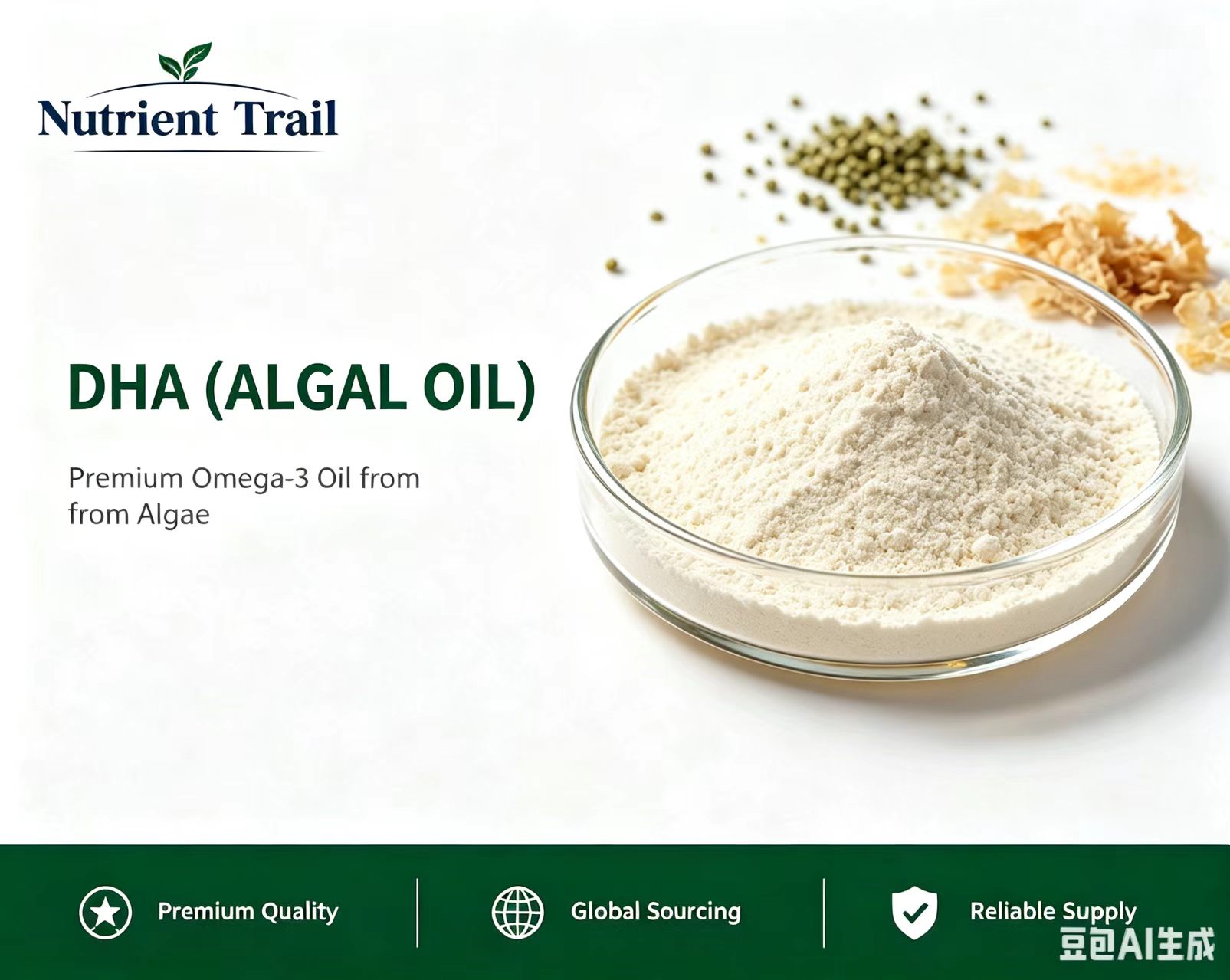
DHA (Algal Oil)
The Omega-3 Powerhouse Nurturing Brain, Vision & Whole-Life Developmental Wellness
Product Specifications
|
Item
|
Specification
|
|
Product Name
|
Docosahexaenoic Acid (Algal Oil)
|
|
Abbreviation
|
DHA
|
|
CAS Number
|
6217-54-5
|
|
Molecular Formula
|
C₂₂H₃₂O₂
|
|
Molecular Weight
|
328.49
|
|
Appearance
|
Clear to Pale Golden Translucent Oily Liquid
|
|
Assay
|
≥40% (Total Docosahexaenoic Acid Content)
|
|
Test Method
|
GC (Gas Chromatography)
|
|
Shelf Life
|
24 Months
|
|
Storage Condition
|
Store in a Cool, Dry, Dark Place, Sealed Away From Oxidation and Direct Sunlight
|
|
Why Is DHA (Algal Oil) So Popular?
The booming global popularity of DHA (Algal Oil) is closely tied to growing public awareness of the irreplaceable role of docosahexaenoic acid, an essential long-chain omega-3 polyunsaturated fatty acid, across every critical stage of human growth and wellness. DHA lies at the core of hundreds of physiological processes, including:
-
Neural network formation and brain cell signal transmission
-
Retinal photoreceptor development and visual acuity maintenance
-
Inflammatory response regulation and cardiovascular barrier protection
-
Neonatal cognitive development and age-related brain function retention
-
Postnatal infant growth and pregnant maternal nutrient reserve support
Research confirms that the human body can only convert small amounts of plant-sourced ALA into active DHA at extremely low efficiency, making external dietary supplementation essential for groups with high nutrient demand, especially infants and pregnant women. Unlike traditional fish-sourced DHA, modern fermentation-produced algal DHA eliminates the risk of marine contaminant residues, fish allergen cross-contact and unpleasant fishy odor, driving it to become the gold standard ingredient for high-purity, clean-label maternal and infant nutrition products globally. This clear scientific consensus and unmet consumer demand for safe, high-quality DHA has made algal DHA a cornerstone of modern life-stage targeted wellness formulations.
Key Benefits of DHA (Algal Oil)
-
Supports Prenatal & Infant Neurodevelopment
DHA makes up over 20% of all fatty acids in human cerebral cortex tissue and accumulates rapidly during the third trimester of pregnancy and the first 2 years after birth. Sufficient DHA intake during pregnancy and lactation effectively supports fetal brain neuron proliferation, neural connection formation, and long-term cognitive and motor development in infants.
-
Nurtures Long-Term Visual Health
As a core structural component of retinal photoreceptor cells, DHA accounts for nearly 60% of the total fatty acid content in retinal tissue. Adequate DHA supplementation helps promote the normal development of infant vision, reduce visual fatigue for children and adolescents during prolonged study and screen use, and maintain healthy retinal function in the elderly.
-
Maintains Cardiovascular Wellness
DHA supports normal blood lipid metabolism by helping to regulate triglyceride levels, maintain the elasticity of vascular endothelial walls, and reduce excessive inflammatory responses, thus effectively supporting long-term cardiovascular and circulatory system health for adults of all ages.
-
Supports Healthy Cognitive Aging
Continuous sufficient DHA intake helps reduce the loss of brain gray matter volume associated with aging, maintain normal neurotransmitter release, slow down age-related cognitive decline, and sustain stable memory, thinking clarity and daily executive function in middle-aged and elderly populations.
-
Gentle, Allergen-Free Nutrient Support
Derived from controlled pure microalgae fermentation rather than marine fish sources, high-quality algal DHA contains no fish protein allergens, no heavy metal or organic pollutant residues common in wild-caught fishery products, and delivers a stable, mild taste that suits the dietary needs of sensitive groups including newborns and pregnant women.
Applications
DHA (Algal Oil) is widely adopted across a full range of life-stage wellness product categories, including:
-
Infant Formula & Follow-Up Nutrition for Toddlers
-
Pregnant & Lactating Women Prenatal Supplements
-
Children's Brain & Vision Care Products
-
Adult Cardiovascular Health Formulations
-
Middle-Aged & Elderly Cognitive Wellness Products
-
Student Focus & Learning Support Nutrition
-
Premium Daily Balanced Wellness Formulas
Common commercial dosage forms include:
-
Softgels (Vegetarian & Gelatin Types Available)
-
Microencapsulated DHA Powder
-
Emulsified Liquid Suspensions
-
Nutritional Fortification Premixes
-
Fortified Dairy Products (Milk, Yogurt, Cheese)
-
Puffed Nutritional Cereals & Baby Snacks
-
Functional Beverages & Plant Milk
DHA (Algal Oil) vs Other Common Omega & Developmental Nutrition Ingredients
While the life-stage nutrition category keeps expanding rapidly, DHA (Algal Oil) remains the most widely recognized and clinically verified DHA source available in the global market:
|
Ingredient
|
Primary Function
|
|
DHA (Algal Oil)
|
Omega-3 for Brain & Retinal Structural Development
|
|
Fish-Sourced DHA
|
Traditional Omega-3 with Marine-Derived Traits
|
|
ARA (Fungal Oil)
|
Omega-6 for Infant Neuro & Immune System Support
|
|
EPA Fish Oil
|
Omega-3 for Cardiovascular & Inflammatory Balance
|
|
ALA (Flaxseed Oil)
|
Plant-Based Omega-3 Precursor
|
|
Lutein
|
Carotenoid for Retinal Blue Light Protection
|
|
|
|
Most leading maternal and child nutrition brands combine DHA (Algal Oil) with complementary ingredients including ARA, lutein, choline and taurine to create full-spectrum developmental nutrition products that cover all key growth support needs for target groups.
Market Opportunity
The global life-stage nutrition and maternal-infant care market continues to deliver steady, strong growth as consumers increasingly prioritize science-backed, traceable, clean-label nutritional ingredients for their families. Multiple core trends are continuously fueling rising market demand for high-purity DHA (Algal Oil):
-
Global consumers' growing awareness of perinatal nutrition science
-
Strict international regulatory requirements for safe, allergen-free fortification ingredients in infant food
-
Expanding premium student eye care and adult cognitive wellness product segments
-
Rapid growth of vegetarian, clean-label, sustainable source consumer demand
-
Continuous rising market share of life-stage targeted personalized nutrition
As a result, DHA (Algal Oil) has become one of the most commercially attractive high-margin ingredients for brands developing next-generation family wellness products across all age groups.
Frequently Asked Questions
1.What is DHA (Algal Oil)?
DHA (Algal Oil) is a high-purity docosahexaenoic acid product produced through controlled closed fermentation of marine microalgae, a natural, highly bioavailable, contaminant-free source of the essential long-chain omega-3 polyunsaturated fatty acid DHA that cannot be efficiently synthesized by the human body on its own.
2.Is DHA naturally present in regular daily food?
Small amounts of DHA can be found in fatty deep-sea fish such as salmon and sardines, but it is difficult for people with high daily demand, especially pregnant women, infants and adolescents, to obtain sufficient DHA intake only through regular daily meals. Algae-sourced DHA completely avoids the risks of ocean pollution residues, fish allergen contamination and overfishing associated with fish-sourced DHA, delivering a purer, more sustainable ingredient solution.
3.What is the difference between DHA and ARA?
DHA is a long-chain omega-3 polyunsaturated fatty acid that focuses on supporting retinal development and cardiovascular health, while ARA is a long-chain omega-6 polyunsaturated fatty acid that mainly supports brain cell membrane structural integrity and immune system regulation. The two nutrients have a clear mutually synergistic effect for infant development, and are very often used in combination in standard infant formula products.
4.What dosage forms can DHA (Algal Oil) be processed into?
DHA (Algal Oil) is suitable for softgels, microencapsulated powder, infant formula fortification, functional dairy products, nutritional premixes and a wide range of other food and supplement applications.
5.What purity levels are commonly available for commercial supply?
Premium food-grade DHA (Algal Oil) produced through modern closed fermentation technology is commonly supplied with a DHA content of 40% or higher, and custom high-concentration specifications of up to 70%+ DHA are also available to meet special high-efficiency formulation needs.
Looking for a Reliable DHA (Algal Oil) Supplier?
As global demand for high-quality maternal-infant, cognitive and vision care products keeps growing, ingredient safety, consistency, traceability and stable supply chains have become top priorities for supplement brands and food manufacturers. Nutrient Trail supplies high-purity, non-allergen DHA (Algal Oil) that meets global food safety standards, designed for dietary supplement, infant nutrition, functional food, and fortified beverage applications. Comprehensive technical documentation including full product specifications, third-party test COA, and complete safety compliance files are available to support your product development, regulatory declaration and commercialization processes.