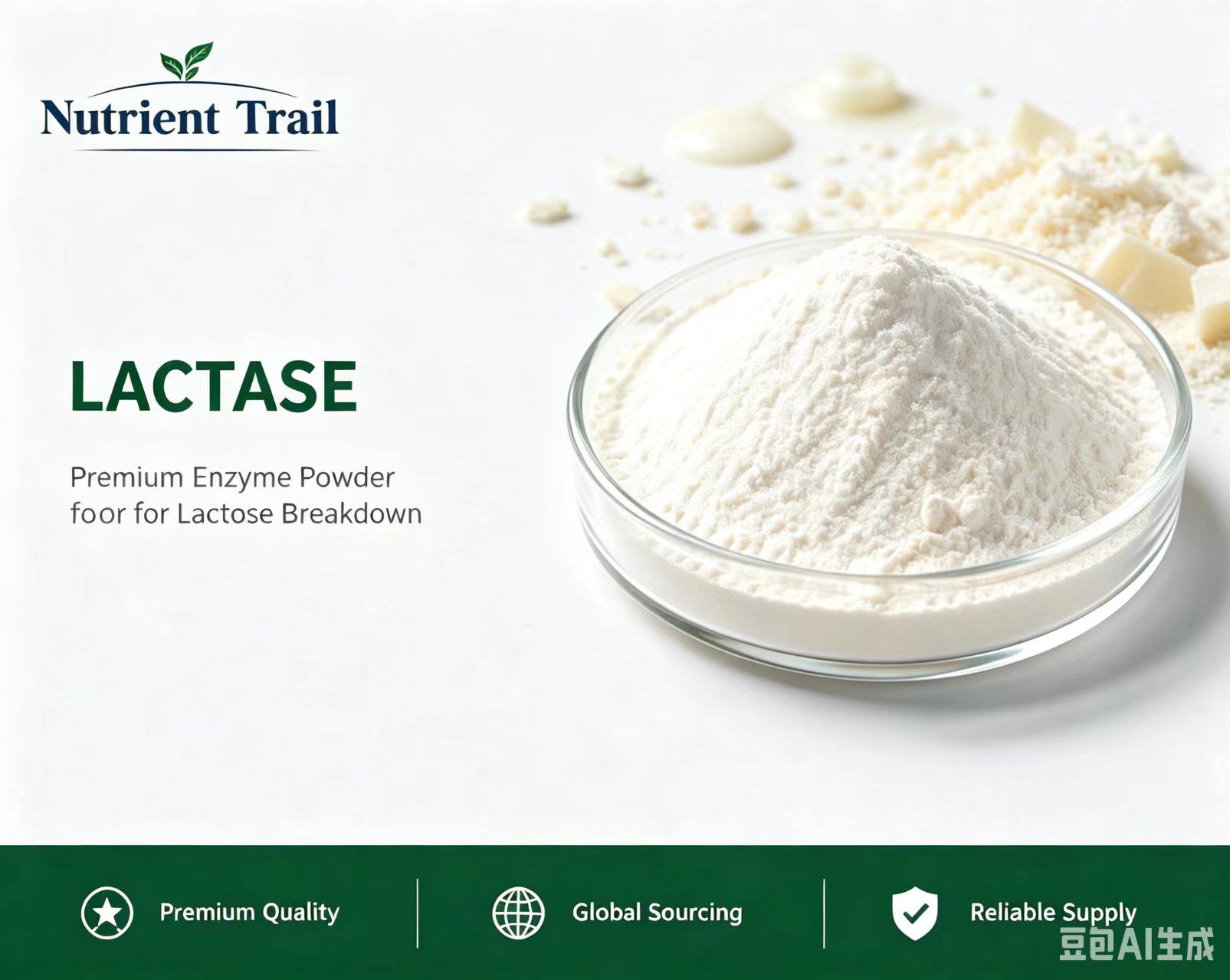
Lactase
The Key Enzyme Unlocking Comfortable Dairy Digestion
Product Specifications
|
Item
|
Specification
|
|
Product Name
|
Lactase (β-D-Galactosidase)
|
|
Abbreviation
|
Lactase
|
|
CAS Number
|
9031-11-2
|
|
Enzyme Activity
|
10,000 ALU/g – 100,000 ALU/g (Customizable)
|
|
Molecular Formula
|
N/A (Enzyme Protein)
|
|
Appearance
|
Off-White to Light Yellow Free-Flowing Powder
|
|
Test Method
|
GB 1886.180 / FCC VII / Ph.Eur
|
|
Shelf Life
|
24 Months
|
|
Storage Condition
|
Store in a Cool, Dry Place Below 25℃, Away from Direct Sunlight
|
|
Why Is Lactase So Popular?
The growing demand for lactase is closely linked to rising global awareness of lactose intolerance, a common digestive condition affecting approximately 65% of the adult population worldwide. As consumer focus on gut wellness, dietary comfort, and inclusive nutrition continues to surge, lactase has emerged as a highly sought-after functional ingredient for brands targeting daily digestive support.
Lactase plays an irreplaceable role in dairy nutrition processing and dietary supplement formulations:
-
Breaks down lactose (the complex sugar in milk and dairy products) into easily absorbable glucose and galactose
-
Supports normal gut barrier function
-
Reduces common digestive discomforts linked to undigested lactose intake
-
Enables lactose-intolerant populations to access the complete nutritional benefits of dairy products
-
Contributes to a balanced, symptom-free daily diet
Research has shown that natural lactase production in the human body often gradually decreases after childhood, leading to common dairy-related digestive issues. As more consumers seek science-backed solutions rather than complete dairy exclusion, lactase has become a cornerstone of modern digestive health and specialized nutrition formulations.
Key Benefits of Lactase
-
Supports Dairy Digestion & Nutrient Absorption
Lactase directly targets undigested lactose that would otherwise ferment in the gut, helping the body fully utilize the calcium, vitamin D, and high-quality protein naturally present in dairy products, without the associated bloating or discomfort.
-
Eases Common Lactose Intolerance Symptoms
For individuals with low endogenous lactase levels, supplementing with exogenous lactase effectively reduces common issues such as post-dairy abdominal distension, cramping, gas, and loose stools, allowing more freedom in dietary choices.
-
Promotes Long-Term Gut Wellness
By preventing lactose fermentation in the intestinal tract, lactase supports a stable, balanced gut microbiota environment, reducing unnecessary gut stress that may disrupt regular digestive function over time.
-
Enables Inclusive Dairy Product Design
Lactase incorporation allows brands to develop lactose-free dairy offerings that retain full original nutrition and natural flavor, catering to consumer groups that were previously excluded from enjoying milk, yogurt, and ice cream products.
-
Supports Active Lifestyle Nutrition
For fitness enthusiasts who rely on whey protein, milk, and other dairy-based protein sources for muscle recovery, lactase removes the digestive barrier so they can absorb high-quality nutrition without post-workout gut discomfort.
Applications
Lactase is widely used across multiple product categories, including:
-
Lactose-Free Dairy Products (Milk, Yogurt, Cheese, Ice Cream)
-
Digestive Health Supplements
-
Probiotic Blends
-
Post-Workout Protein Powders & RTDs
-
Children's Special Nutrition Products
-
Senior Gut Wellness Formulations
-
Digestive Support Functional Snacks
Common dosage forms for standalone lactase supplements include:
-
Capsules
-
Tablets
-
Powder Blends
-
Stick Packs
-
Chewables
-
Dissolvable Strips
Lactase vs Other Digestive Enzyme Ingredients
While the digestive health category continues to expand rapidly, lactase remains one of the most targeted, well-documented functional ingredients specifically addressing widespread population dietary needs.
|
Ingredient
|
Primary Function
|
|
Lactase
|
Lactose-Specific Breakdown, Dairy Digestion Support
|
|
Amylase
|
Carbohydrate & Starch Digestion
|
|
Protease
|
Protein Breakdown & Absorption
|
|
Lipase
|
Fat Digestion & Utilization
|
|
Cellulase
|
Plant Fiber Degradation
|
|
Bromelain
|
Anti-Inflammatory & Protein Digestion Support
|
|
Many brands combine lactase with complementary digestive enzymes and probiotics to create comprehensive full-spectrum digestive wellness formulations.
Market Opportunity
The global digestive health ingredient market continues to experience robust growth as consumers increasingly prioritize gut comfort, personalized nutrition, and inclusive dietary solutions. Several trends are fueling the rapidly rising demand for lactase:
-
Growing public awareness of lactose intolerance and its manageable solutions
-
Rising demand for clean-label lactose-free dairy alternatives
-
Expansion of the over-the-counter digestive supplement category
-
Consumer shift towards science-backed, targeted enzyme ingredients
-
Increasing adoption of specialized nutrition for children, seniors, and fitness populations
As a result, lactase remains one of the most commercially attractive ingredients for brands developing next-generation digestive wellness and specialized nutrition products.
Frequently Asked Questions
1.What is Lactase?
Lactase, or β-D-Galactosidase, is a naturally derived digestive enzyme that specifically breaks down lactose, the disaccharide found in almost all mammalian dairy milk. It is an essential ingredient that helps users unlock the full nutritional value of dairy without associated digestive discomfort.
2.Is Lactase safe for long-term consumption?
Yes. Lactase has obtained global food safety certifications including GRAS, and is widely approved for use in food and dietary supplement products across major markets, with no documented adverse effects for regular long-term use.
3.What is the difference between plant-derived, fungal-derived and microbial lactase?
Most commercial food-grade lactase is produced via controlled fermentation of qualified strains such as Aspergillus oryzae or Kluyveromyces lactis, delivering consistent high enzyme activity, high purity and no risk of animal-derived pathogens, making it suitable for all consumer groups including vegetarians.
4.What formulations can Lactase be used in?
Lactase with proper activity stabilization technology is suitable for lactose-free dairy processing, encapsulated enzyme supplements, digestive powder blends, chewable tablets, and functional snack applications.
5.What activity levels are typically available?
Premium food-grade lactase is commonly supplied in activity ranges from 10,000 ALU/g up to 100,000 ALU/g, with custom high-activity options available for specialized formulation requirements.
Looking for a Reliable Lactase Supplier?
As global demand for digestive health and lactose-free nutrition products continues to surge, enzyme activity stability, ingredient purity, and consistent supply chain reliability have become increasingly critical for nutrition brands and food manufacturers. Nutrient Trail supplies high-activity, third-party verified lactase designed for food processing, dietary supplement, and specialized nutrition applications.