Retinyl Palmitate
The Gentle, Stable Vitamin A Derivative Powering Daily Anti-Aging & Skin Care Formulations
Product Specifications
|
Item
|
Specification
|
|
Product Name
|
Retinyl Palmitate
|
|
Abbreviation
|
Vitamin A Palmitate
|
|
CAS Number
|
79-81-2
|
|
Molecular Formula
|
C₃₆H₆₀O₂
|
|
Molecular Weight
|
524.86
|
|
Appearance
|
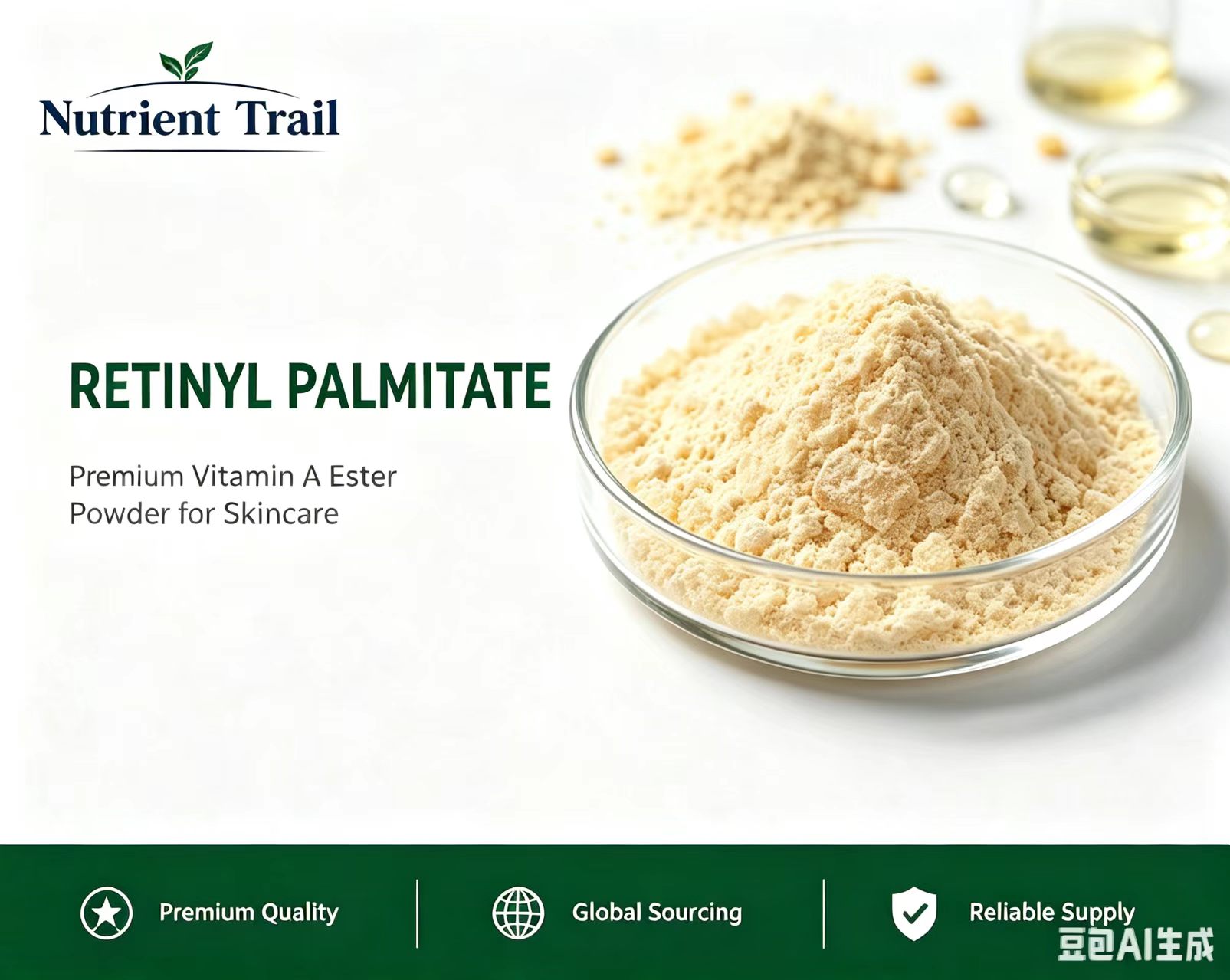
Yellow to Amber Transparent Viscous Oil
|
|
Assay
|
1.0 MIU/g, 1.7 MIU/g, 2.5 MIU/g, 1.0 MMU/g, 2.0 MMU/g, 1.6 MMU/g (customizable for different use scenarios)
|
|
Test Method
|
HPLC / UV Spectrophotometry
|
|
Shelf Life
|
24 Months
|
|
Storage Condition
|
Store in a Cool, Dry, Light-Protected Place, Sealed and Isolated from Air
|
|
Why Is Retinyl Palmitate So Popular In The Global Skin Care & Nutrition Industry?
The widespread, long-standing popularity of Retinyl Palmitate comes from its ideal balance of efficacy, mildness and stability, solving nearly all the core pain points of pure retinol (vitamin A) that easily cause skin irritation, oxidation and deactivation. As a classic esterified derivative of natural Vitamin A, Retinyl Palmitate is the most stable, low-irritation form of Vitamin A, widely approved for use in both oral nutritional supplement and topical cosmetic products across the world.
Retinyl Palmitate plays irreplaceable core roles across multiple critical biological processes including:
-
Supporting normal epithelial tissue growth and maintaining healthy skin barrier function
-
Slowly converting into active Retinol in the skin to drive natural collagen production
-
Regulating skin keratinization to reduce clogged pores and excess sebum secretion
-
Neutralishing free radicals and reducing UV-induced skin oxidative damage
-
Supporting normal vision health and maintaining immune system mucosal integrity
Decades of widespread practical application prove that Retinyl Palmitate, compared with high-purity retinol, will not easily cause redness, peeling, stinging or extreme photosensitivity. It gradually releases active ingredients in the skin through natural metabolic pathways to deliver long-term anti-aging effects. These excellent characteristics make it a foundational staple in countless classic daily skin care, children's nutrition and multi-vitamin supplement formulations.
Key Benefits of Retinyl Palmitate
-
Ultra-Stable, Low-Irritation Vitamin A Supply
Pure Retinol is extremely easy to oxidize and deactivate when exposed to light, heat or air, and it often causes strong irritation for sensitive skin users. Retinyl Palmitate uses a palmitic acid ester protective structure that prevents rapid degradation, and the body slowly metabolizes it into usable active Vitamin A step by step, avoiding the sudden high concentration impact that triggers adverse skin reactions. It is fully suitable for beginners who are new to Vitamin A anti-aging ingredients, and can even be used for long-term daily care by users with mild sensitive skin.
-
Gently Promotes Collagen Synthesis and Reduces Fine Lines
After being absorbed by the skin, Retinyl Palmitate is gradually converted into active retinol and retinoic acid in cells, which signals dermal fibroblasts to produce more collagen and elastin, thickens the thinning epidermal layer caused by natural aging, effectively reduces the appearance of dry fine lines and early expression lines, and improves overall skin firmness without excessive skin shedding.
-
Regulates Keratin Metabolism and Refines Pores
Retinyl Palmitate helps normalize the abnormal skin keratinization process, prevents excess keratin from clogging hair follicle openings, reduces the formation of blackheads, whiteheads and closed comedones, and controls excess sebum secretion, making pores look visually refined, and helping maintain a smooth, clear skin texture for oily and combination skin.
-
Delivers Anti-Oxidative Photoprotection and Reduces Skin Damage
Retinyl Palmitate can effectively reduce the free radical damage caused by UV exposure, assist the skin in repairing sunlight-induced DNA damage, reduce long-term photoaging symptoms, and is extremely widely added in daily moisturizers, sunscreen products and after-sun repair formulations to build an extra layer of protective barrier for the skin.
-
Supports Full-Body Nutritional Health
As an approved oral Vitamin A source, Retinyl Palmitate can effectively support normal visual function, maintain the health of mucous membranes in the respiratory, digestive and reproductive systems, assist normal immune response, and it is the most common Vitamin A raw material added in children's multivitamins, dietary supplements and fortified food products.
Applications
Retinyl Palmitate is widely used across multiple high-growth product categories, including:
-
Gentle Entry-Level Anti-Aging Skin Care Lines
-
Daily Moisturizers and Night Repair Creams
-
Sunscreen and After-Sun Care Products
-
Pore Refining and Mild Acne Care Formulations
-
Oral Multivitamin and Mineral Supplements
-
Children's Nutritional Fortified Foods
-
Eye Health Support Supplements
-
Anti-Aging Facial Serums and Ampoules
Common formulation forms that work perfectly with Retinyl Palmitate include:
-
Face Creams and Lotions
-
Topical Serums
-
Sun Care Products
-
Capsules
-
Tablets
-
Chewable Gummies
-
Fortified Dairy and Food Products
-
Nutritional Beverages
Retinyl Palmitate vs Other Vitamin A Derivatives
While the Vitamin A anti-aging category continues to expand rapidly, Retinyl Palmitate remains one of the most market-proven, safe and cost-effective ingredients with extremely high user tolerance:
|
Ingredient
|
Primary Function
|
|
Retinyl Palmitate
|
Gentle ester Vitamin A, ultra-stable, low irritation, suitable for daily long-term use
|
|
Retinol (Pure Vitamin A)
|
Free alcohol form Vitamin A, high efficacy, but easy to oxidize, strong irritation, high photosensitivity
|
|
Retinaldehyde
|
Intermediate Vitamin A derivative, efficacy stronger than retinol, moderate irritation
|
|
Hydroxypinacolone Retinoate (HPR)
|
New retinoic acid ester, no metabolic conversion required, moderate irritation
|
|
Beta-Carotene
|
Provitamin A, natural plant source, can be converted into Vitamin A in the body, very mild
|
|
Retinoic Acid (Tretinoin)
|
Prescription drug grade Vitamin A, strong efficacy, high irritation, strictly for medical use only
|
|
Most leading daily skin care brands combine Retinyl Palmitate with complementary ingredients including Vitamin E, Hyaluronic Acid, Centella Asiatica Extract and Niacinamide to create mild, high-tolerance anti-aging formulations that deliver far better long-term effects than harsh high-concentration retinol products.
|
|
|
Market Opportunity
The global gentle Vitamin A skin care and nutritional supplement market continues to maintain strong steady annual growth, as a large number of anti-aging beginners and sensitive skin users are actively looking for non-irritating Vitamin A products that can be used daily without side effects. Multiple high-impact industry trends are continuously driving surging demand for Retinyl Palmitate:
-
Massive consumer shift away from harsh high-concentration retinol products that cause damaged skin barriers
-
Fast-expanding entry-level anti-aging user group aged 20 to 30 looking for mild first anti-wrinkle care
-
Long-term stable demand for Vitamin A raw materials in the global fortified food and children's nutrition market
-
Strict regulatory recognition of Retinyl Palmitate as a safe ingredient for both cosmetic and food use across almost all major countries and regions
-
Rising consumer demand for multi-functional daily skin care products that combine anti-aging, sunscreen and moisturizing effects
As a result, Retinyl Palmitate remains one of the most commercially attractive, low-risk ingredients for brands developing accessible, high-reliability anti-aging skin care and nutritional supplement products.
Frequently Asked Questions
1.What is Retinyl Palmitate?
Retinyl Palmitate is an esterified derivative of Vitamin A, formed by combining retinol and palmitic acid. It is the most stable and mild form of Vitamin A, which the human body can naturally slowly convert into active Retinol to deliver all Vitamin A benefits with minimal irritation risk.
2.Can Retinyl Palmitate be used by beginners who have never used Vitamin A products?
Absolutely. Retinyl Palmitate has far higher tolerance than pure retinol, and almost does not cause common Vitamin A side effects such as peeling, redness and severe photosensitivity. It is the most ideal choice for users who are new to Vitamin A anti-aging ingredients to build skin tolerance step by step.
3.What is the typical effective concentration for cosmetic products?
For daily mild anti-aging moisturizers, 0.1% to 0.5% Retinyl Palmitate is the common addition amount. For targeted anti-wrinkle night care products, the concentration can be appropriately increased to 1% to 2% according to formula positioning.
4.Is Retinyl Palmitate allowed to be added to oral supplements?
Yes, Retinyl Palmitate is the most widely used Vitamin A source for oral nutritional supplements and fortified foods around the world, fully meeting food safety regulations in major markets.
5.What specifications of Retinyl Palmitate are commonly available for commercial use?
Retinyl Palmitate for cosmetic and food use is supplied in multiple customizable potency specifications from 1 million IU/g up to 2.8 million IU/g, which can meet different formulation scenarios of low-dose daily care to high-efficacy anti-aging products.
Looking for a Reliable Retinyl Palmitate Supplier?
As global demand for mild, stable Vitamin A skin care products and nutritional fortified foods continues to stay strong, ingredient potency accuracy, batch-to-batch stability, antioxidant protection and full regulatory qualification documents have become critical priorities for cosmetic brands and food manufacturers.
Nutrient Trail supplies high-quality Retinyl Palmitate with full potency verification, designed for skin care, cosmetic, dietary supplement and fortified food applications. Comprehensive technical documentation including full specifications, third-party test reports, COA and complete food safety certification files are fully available to support your entire product development and commercialization process.